WCW Exposé: Cosmetics Testing on Animals With Your Tax Dollars
Animal testing by cosmetics companies is becoming a thing of the past, but did you know that the federal government is still secretively forcing you to pay for cruel, ineffective and expensive cosmetics tests on animals?
A new White Coat Waste Project analysis of more than 100 chemicals, foods, herbal supplements and other substances being tested on animals (or soon to be) by the federal National Toxicology Program found that cosmetics and their ingredients are among the compounds on the list that are each undergoing numerous animal tests.
In 30 ongoing and planned tests by NTP, massive doses of natural fragrances and colorings used in cosmetics and personal care products are being forced down animals’ throats or smeared onto their bare skin. Recently, a hair dye ingredient and cedar oil fragrance were also used for painful and deadly animal tests.
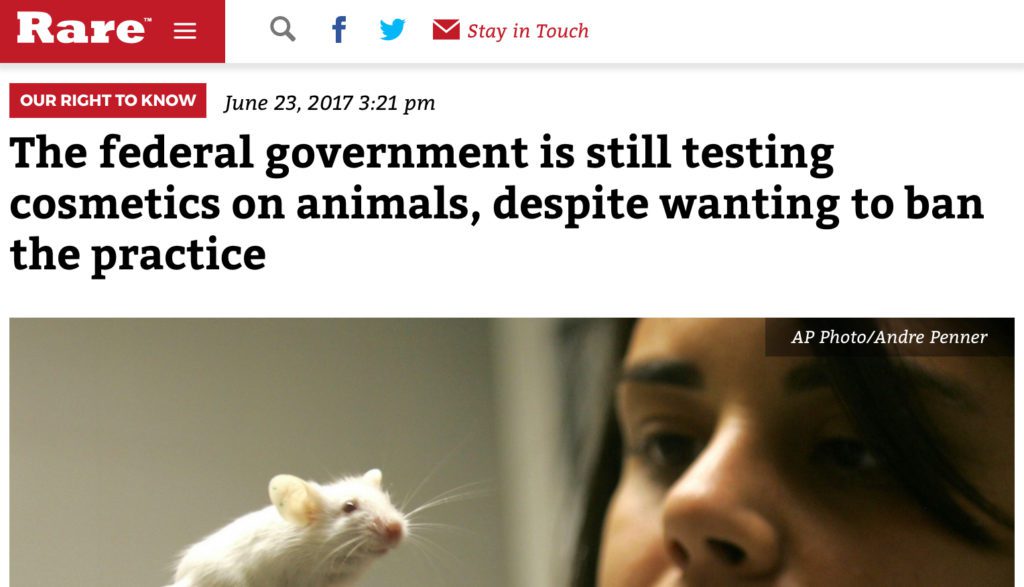
As Rare reported:
…it seems cosmetic companies in the United States have already stopped testing their products on animals anyway. The federal government, however, has not.
…
In their recent research, WCWP uncovered that the national government is currently using taxpayer money to conduct animal tests on cosmetics — making it the only entity in the country that still does so.
…
Not only are they arguably inhumane, but some of these individual experiments can take three to five years to complete, use more than 800 animals and cost taxpayers as much as $4 million. However, it’s possible that those numbers could be even higher, as it’s difficult to determine exactly how many animals are used and how much money is spent because the federal government currently does not disclose that information in its entirety.
New federal legislation has been proposed to ban cosmetics testing on animals and the sale of cosmetics tested on animals. But, as Rare writes, cutting wasteful government spending could make an immediate dent in the problem:
before passing a bill that would place unnecessary regulations on cosmetic companies that have already chosen to end the practice of animal testing, WCWP suggests that the government take a look at its own practices first.


Related Blogs